Live on Google Play
DHRUVA
Your constant in motion.
A destination alarm for trains, buses, metro and cabs. Tell it where you’re getting off — it watches the distance, not the clock, and wakes you before your stop. Even with the app closed.
AI product strategy · Responsible intelligence · Android
6.8 km to your stop
Alarm rings inside the 5 km radius
Try it · a 30-second ride
Ride one before you install.
DHRUVA alerts on distance, not time. Pick how you travel and how early you want to know — then ride. A calm arrival means two to twelve minutes to gather your things. Earn one for every mode.
≈ 5 min of warning at 60 km/h Calm
Calm arrivals
0 / 6
Ride each mode to a calm arrival to fill the set.
What shipped · screen by screen
Nine screens, one calm journey.
Real screens from the release on Google Play — in the order a traveller meets them.
01Start
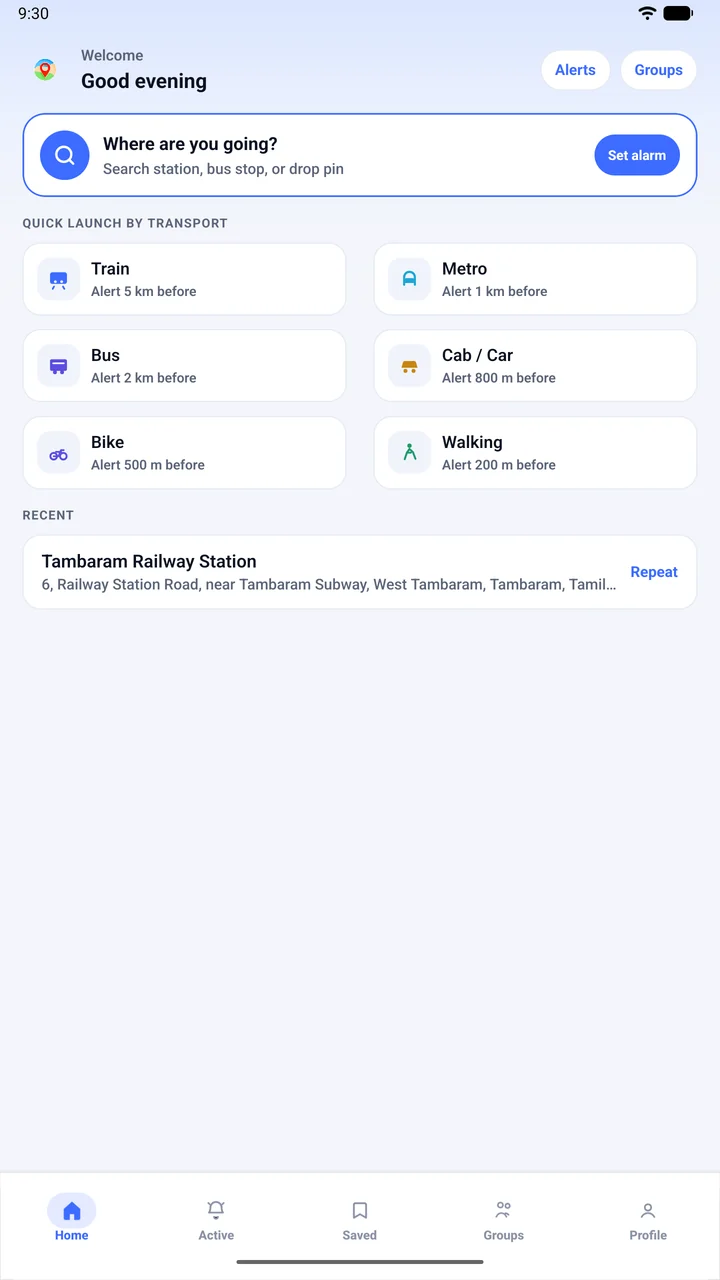
Where are you going?
One question, then one tap per way of travelling — each with a sensible default distance.
02Find
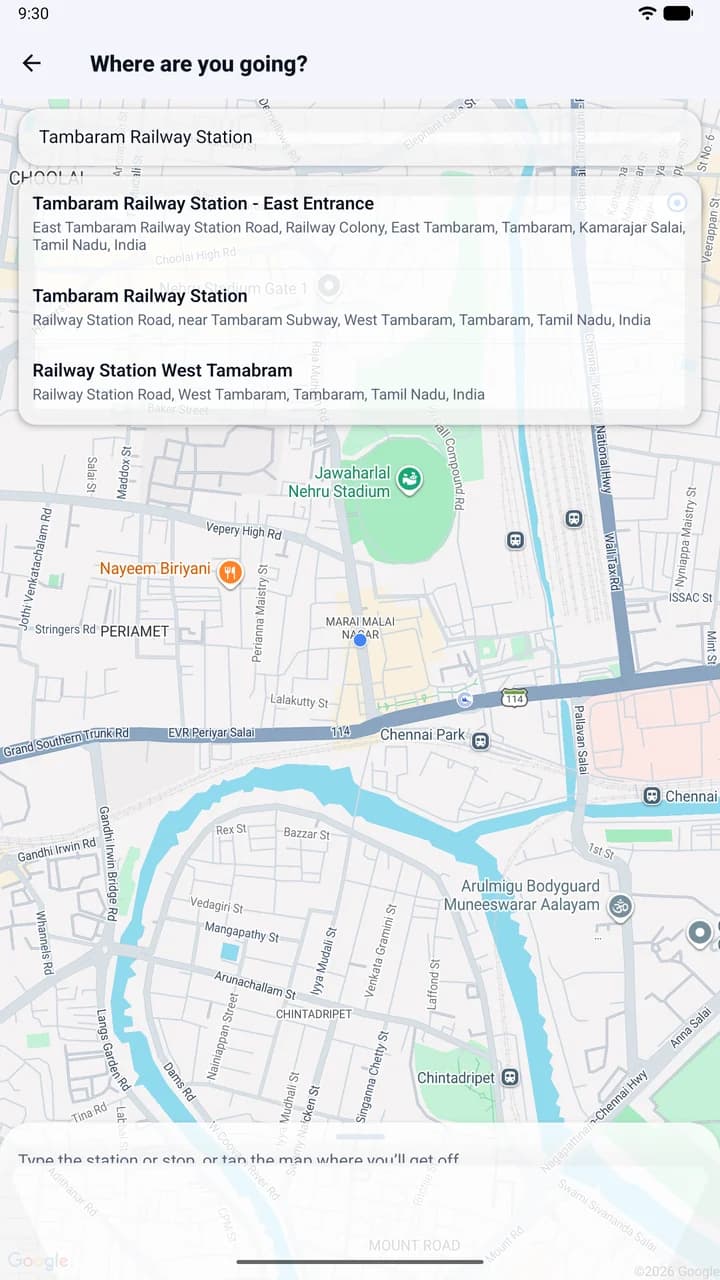
Search a stop or drop a pin
Stations, bus stops and landmarks — or tap the map where you’ll get off.
03Set
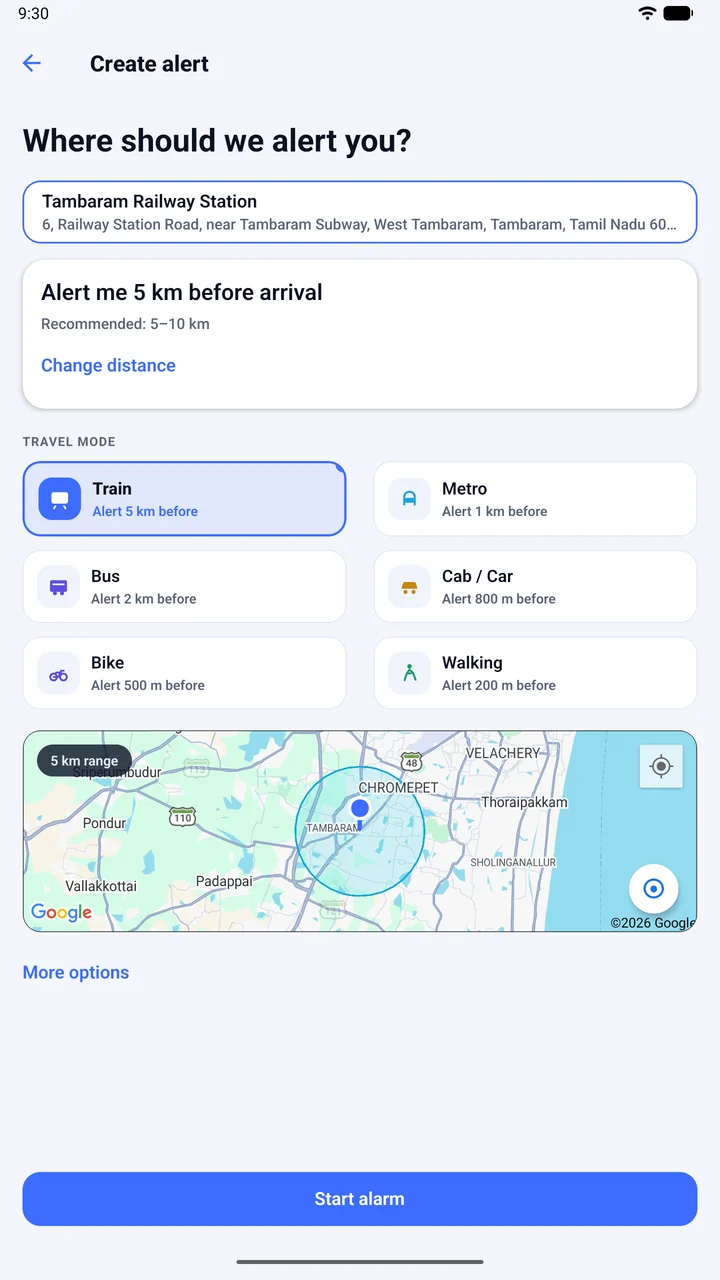
Alert me 5 km before arrival
Distance, not time. Recommended ranges per mode, and you can always change it.
04Ride
Watching, quietly
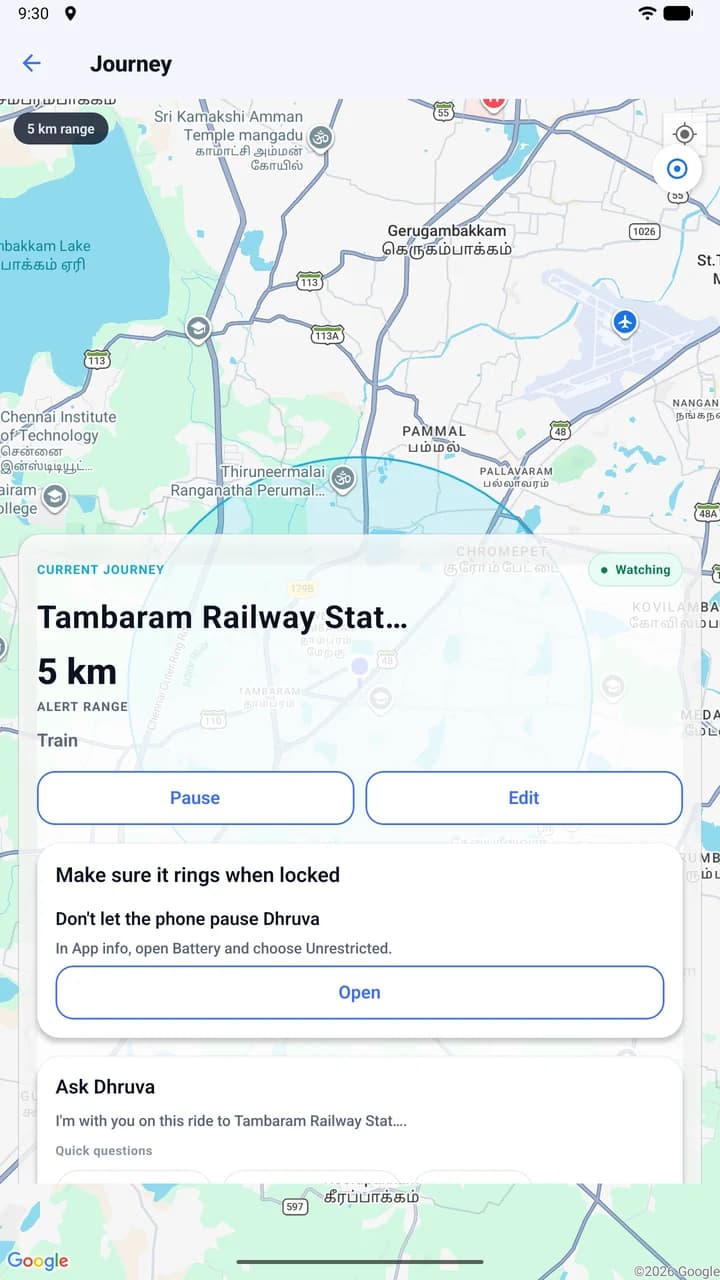
Your radius on the map, pause or edit any time — and a nudge to make sure it rings when locked.
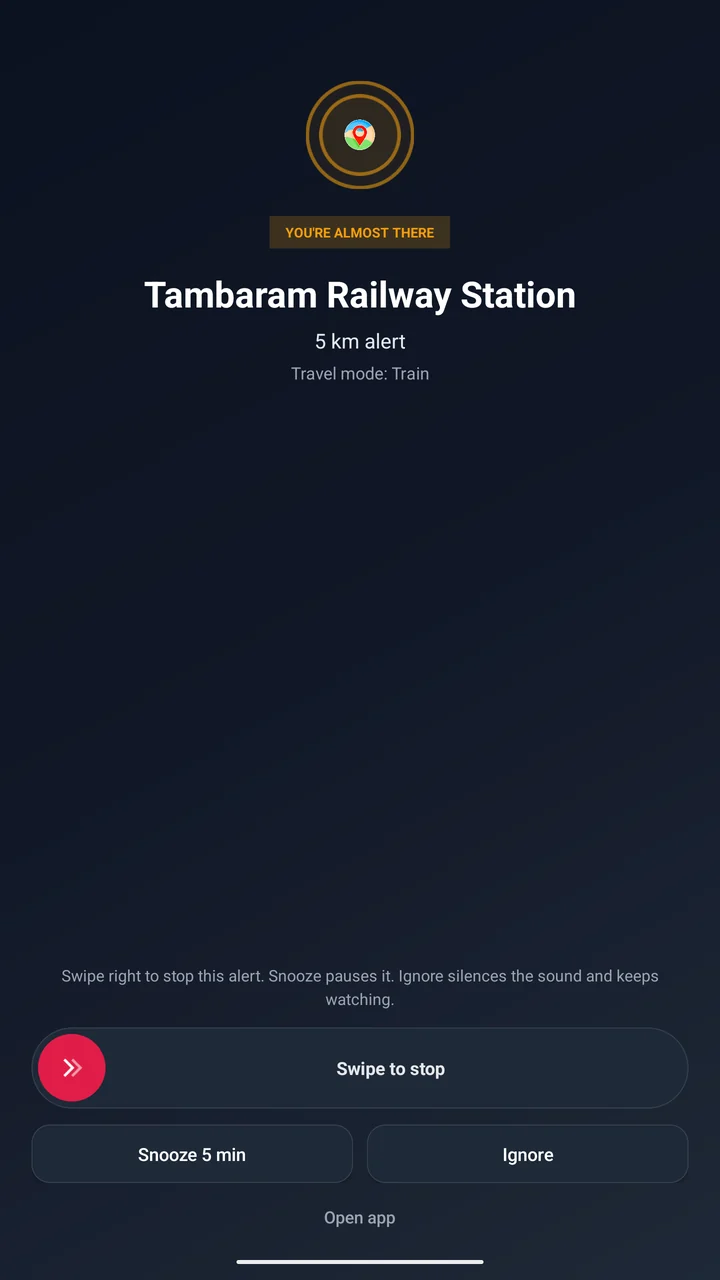
05Arrive
You’re almost there
Swipe to stop, snooze five minutes, or ignore. It rings even when the app is closed.
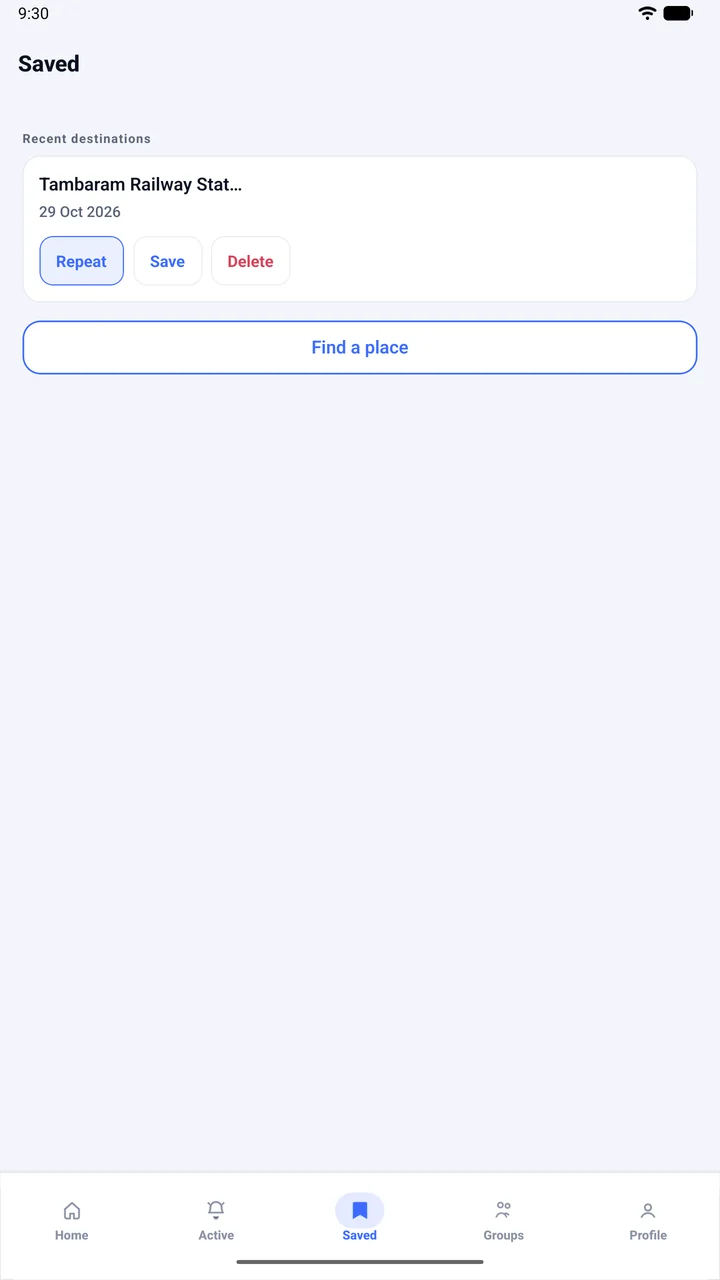
06Repeat
Saved and recent places
Repeat yesterday’s commute in a tap. Save it, or delete it.
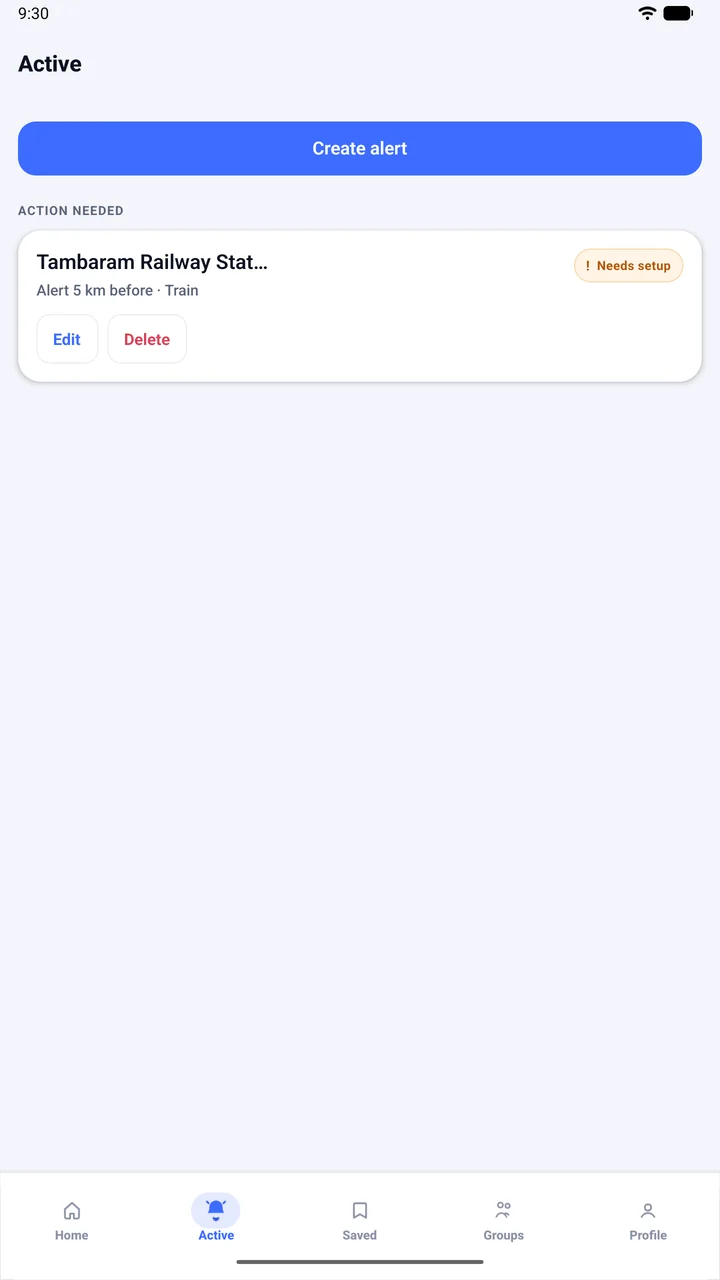
07Manage
Active alarms
Everything that’s watching, and anything that needs your attention.
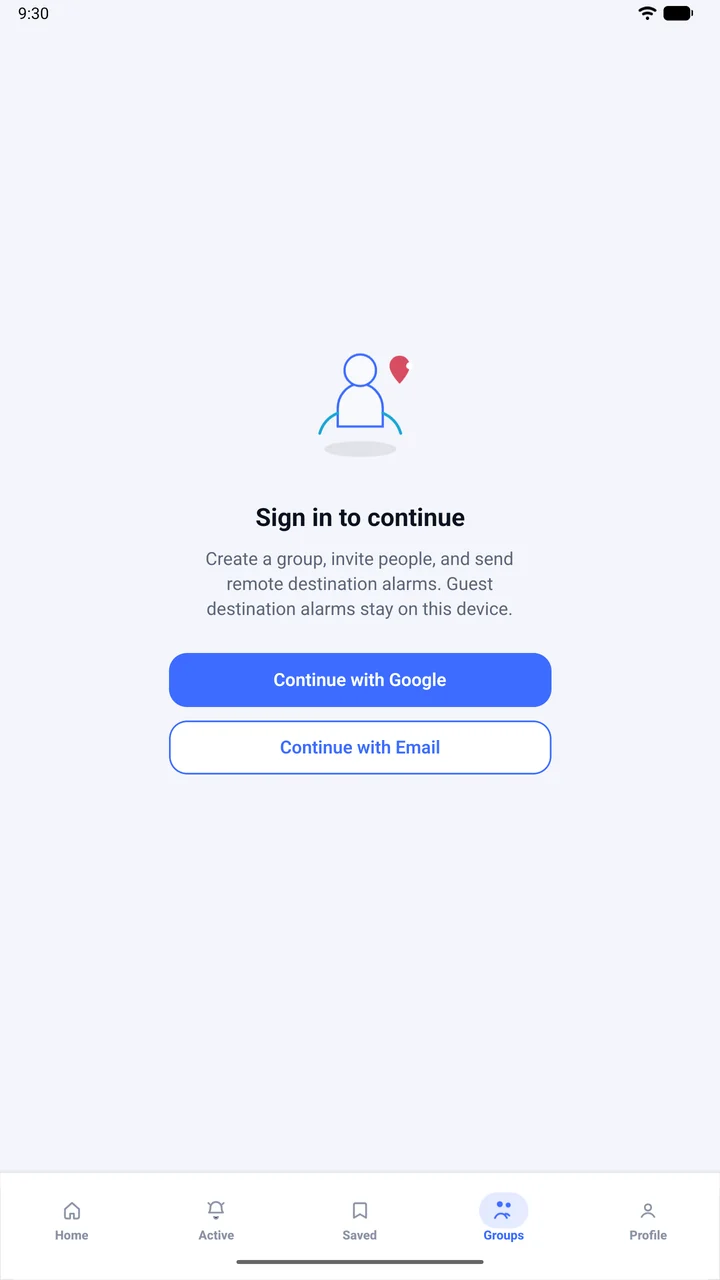
08Family
Groups, by invitation
Invite people you trust. Joining never shares your live location.
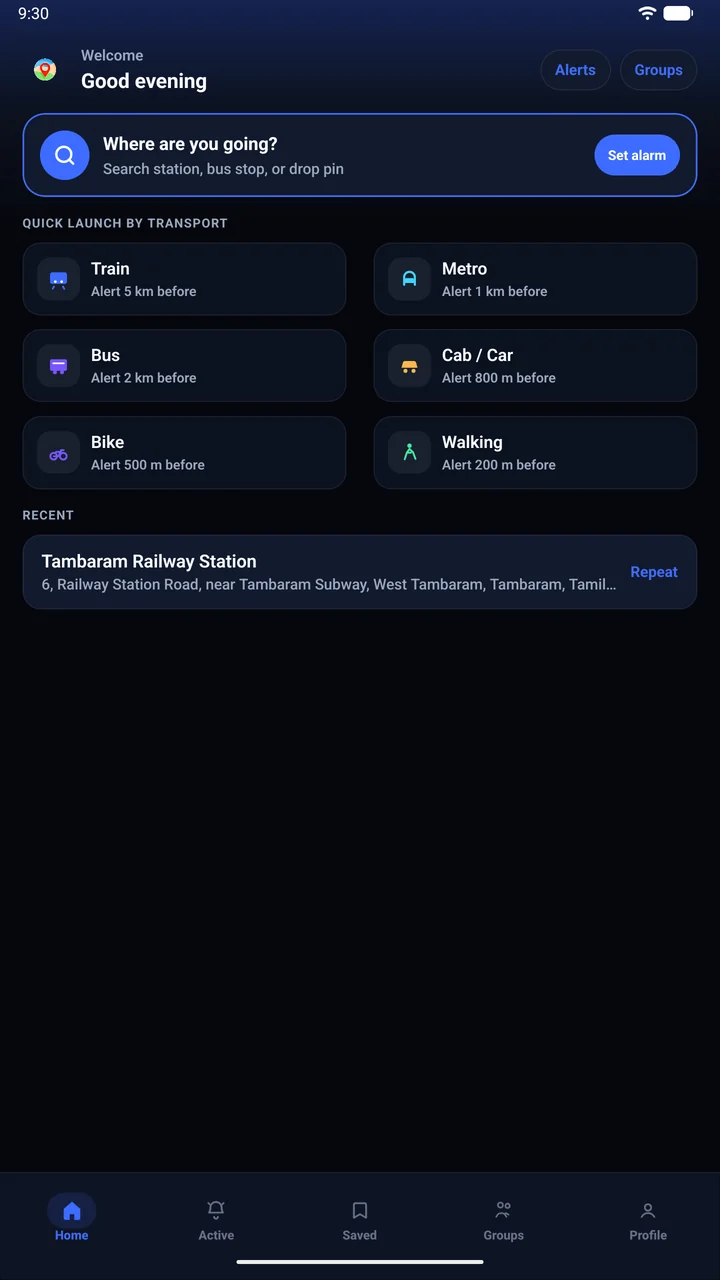
09Night
Built for night journeys
A full dark theme for overnight trains and late buses.
Now live on Google Play
From case study to a stop you won’t miss.
Everything on this page — the reframing from time to place, assistance without surveillance, honesty about what the system has actually done — now ships as a real Android app. A destination alarm for trains, buses, metro, cabs and everyday travel.
- Platform
- Android
- Category
- Maps & Navigation
- Content rating
- Rated 3+
- Publisher
- Raju Subramani
Destination set
Alert 1.2 km before arrival
What the case study promised → what shipped
Arrive
Alerts tied to where you are, not what time it is.
In the app
Destination alarms that ring as you approach your stop — even with the app closed.
Assist
Help someone travel without gaining permanent access to them.
In the app
Family Space: a trusted person can prepare an alarm for you — you confirm and activate it.
Assistance ≠ surveillance
Location only in service of a journey the traveller chose.
In the app
Background location only for alarms you turn on. Joining a family does not share live location.
In the app today
Arrive on time
Pick a destination and how you travel, set how early to be alerted, and activate.
Save places
Home, Office and custom stops for one-tap alarms; recent destinations for repeat commutes.
Smart alarms
Clock alarms and reminders for tasks you choose, scheduled on your device.
Tell Dhruva
Type or speak what you need, review the plan, then activate. You stay in control.
Family (optional)
Invite people you trust with a one-time code. No live location sharing.
Privacy first
Not continuous tracking. Delete your account any time from Settings.
As the listing says plainly: Dhruva does not provide emergency services, medical advice or live family GPS tracking — the same honesty about scope this case study argues for.
I wasn't trying to build a travel product.
I was trying not to miss my stop.
Long journeys are rare moments to disconnect. One thought stays quietly in the background.
Traditional alarms understand when. Travel problems often depend on where.

Different travellers.
Same underlying need.
Confidence during the journey.
Students travel overnight. Professionals commute exhausted. Parents travel alone. Families worry in silence.

"Can I sleep until my station?"
Overnight routes
ARRIVE
Wake me when the journey matters again.
Choose a destination. Decide how far before arrival. Start. Put the phone away. Not replacing Maps — reducing the need to continuously look at Maps.
Destination selected

Then I stopped thinking only about myself.
What if this was my parent travelling alone?
Could I prepare the journey for them?
And if I can help them...
does that mean I should be allowed to track them?
Tap to see what tracking would have meant.
Three pillars. One human principle.
Travel assistance when you need it. Privacy when you don't.
Wake me when the journey matters again.
Choose where, how, and how early. The rest disappears into the background — designed for tunnels, weak signals and imperfect connectivity.
Destination set
Alert 1.2 km before arrival
A system should communicate what actually happened.
Not what we hope happened.
Now you know it is actually ready on the traveller's device.
Arrival wasn't the only uncertainty.
What if the journey moves away?
What if it stops unexpectedly?
What if connectivity disappears?
The obvious solution was continuous tracking.
I chose a different approach.
PROTECT
Additional awareness only when the traveller chooses it.
Journey Safety begins with the traveller's decision. It ends when the journey completes.
Origin
Mumbai CST
Destination
Pune Junction
Travel Mode
Train
Expected Arrival
11:45 PM
Trusted Guardian
Priya (Sister)
Journey Safety
Tap to start
Intelligence should reduce noise — not create fear.
One inaccurate GPS point jumps away. No alert. Normal points follow. Nothing happens. Only when several points consistently suggest a different story — the interface reacts.
Journey proceeding normally
Safety check · Interactive demo
Are you safe?
Your journey appears to be moving away from the expected route.
The system contributes context. The person keeps agency.
Observations are not conclusions.
Location intelligence can identify unusual movement. It cannot automatically explain why it happened.
Tap either card to see its effect on the traveller.
I didn't ask where can I add AI.
I asked where can intelligence improve a human decision.
Intelligence should reduce noise — not create fear.
Product direction
These represent product direction — not all necessarily current functionality.
AI accelerated execution.
It didn't replace product judgment.

Advanced technology matters only when ordinary people can use it.
Complexity belongs inside the product — not with the traveller.
DHRUVA
Four decisions.
Everything else stays out of the way.
Real products live outside the happy path.
The journey continues through tunnels, low battery, GPS noise, app restarts and patchy connectivity.
Good signal
Journey state clear and current.
Principles
Put responsibility where it creates the best product outcome.
Signal → Context → Understanding
Intelligence helps DHRUVA understand when to help. The traveller still decides how.
Consent drives architecture
The trust model is not a UI decision — it is built into how data flows through the system.
Accessibility also has an economic side.
I deliberately questioned whether functionality required cloud infrastructure or could happen reliably on-device. Affordability is part of accessibility.
Product
Tap each principle to explore the trade-off behind it.
Start with one real problem.
Understand how far that behaviour can travel.
One Traveller
Current Product
Family
Adjacent Opportunity
Assisted Travel
Longer Horizon
Mobility Ecosystem
Long-term Possibility
Downloads would not be my North Star.
Confident journeys — not installs — would tell me whether Dhruva was working.
Confident Journeys
North Star
Tap any metric to see what it measures.
Features should earn their place.
Not every idea becomes a feature. Try the decision gate.
Question 1 of 7
Real problem?
NO.
Limits can make a product more trustworthy.

DHRUVA
Your constant in motion.
Dhruva represents the idea of a constant reference while everything around it moves. That felt right for a product designed to quietly help travellers remain aware through changing journeys.
A quiet point of confidence through the journey.
Live on Google Play · Android

I don't want Dhruva to become another app travellers constantly manage.
I want it to become something they trust enough to stop thinking about.
Technology should support the journey — not become the journey.
JOURNEY COMPLETE
DHRUVA
Arrive with confidence. Stay connected by choice. Use intelligence with purpose.
Continue Exploring
Related Product Explorations
Work Intelligence · Governed AI
Weekwise
An independent product exploration connecting operational evidence, role-based workflows and human-centred AI within one platform.
Shared Spending · Mobile Product
Splitflow
A mobile-first product exploration designed around the moments people share — reducing friction in everyday shared spending.